Finding the balance between affordability and hand protection is a common challenge for procurement managers and industrial safety officers. Many search for cheap leather gloves, but the real objective is usually "value"—securing durable, high-performance gear without overextending the operational budget.
In the leather goods manufacturing sector, the cost of a glove is determined by more than just the material. Factors such as the grade of the hide, the tanning process, and the specific reinforcement techniques all play a role in whether a budget-friendly option will withstand the rigors of a heavy-duty industrial environment or fail prematurely.
This guide analyzes how to identify quality in budget-conscious leather hand protection, the technical trade-offs involved in low-cost production, and how to evaluate suppliers to ensure that "cheap" does not translate to "dangerous" or "short-lived."

Understanding the Cost Drivers of Budget Leather Protection

The price of leather gloves is rarely a reflection of quality alone; it is a reflection of the supply chain efficiency and material selection. When sourcing budget-friendly options, it is crucial to understand the difference between "cheap" materials and "optimized" manufacturing processes.
For instance, leveraging industrial agglomeration—such as production bases in Xinji City—allows manufacturers to access raw materials more quickly and reduce transportation costs. This proximity to ports and raw leather hubs enables a competitive market price without necessarily sacrificing the structural integrity of the glove.
The primary cost variables typically include the type of leather (split leather vs. full grain), the thickness of the hide, and the complexity of the stitching. A glove designed for basic abrasion resistance will naturally be more affordable than one designed for high-level chemical resistance or thermal insulation.
Essential Technical Features for Industrial Safety Gloves
To ensure that budget leather gloves provide adequate protection, certain technical benchmarks must be met. High-quality industrial gloves often blend natural leather with synthetic fibers or specialized coatings to enhance durability.
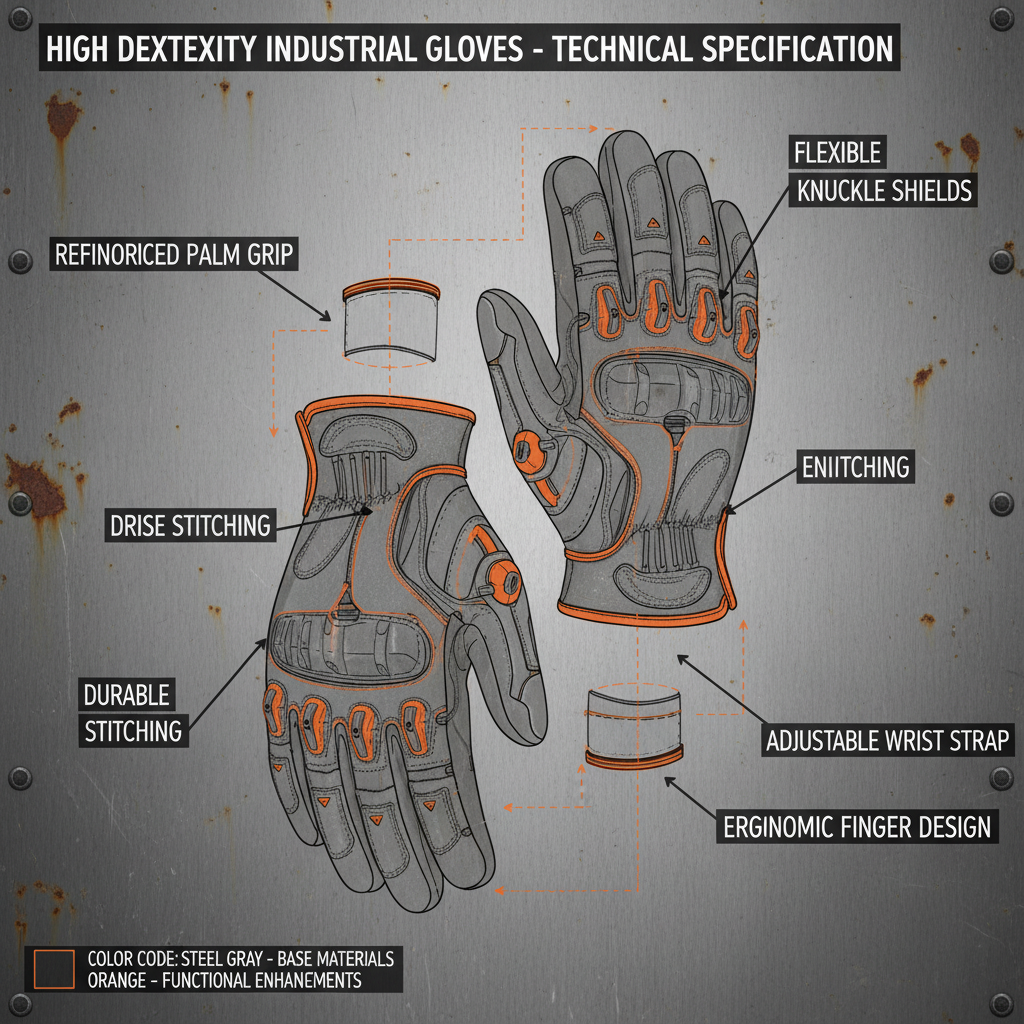
Key features to look for include reinforced palms and fingertips, which protect against punctures and impact in heavy-duty tasks. Furthermore, the integration of breathable linings is essential for long-term use, as moisture-wicking properties prevent skin irritation and maintain grip efficiency.
Another critical technical aspect is the wrist closure. An adjustable closure prevents debris from entering the glove, which is a common safety hazard in construction and manufacturing settings. When these features are combined with a non-slip grip, the glove remains effective even in oily or wet conditions.
Application Scenarios for Cost-Effective Leather Gear
Different industries require different levels of protection, making the "best" cheap leather glove dependent entirely on the application. For general warehouse work, a basic leather glove with a focus on abrasion resistance is sufficient and cost-effective.
In heavy industrial settings, such as metal fabrication or construction, the focus shifts toward cut-resistance. Here, budget options often utilize a blend of Kevlar and synthetic fibers. These gloves provide the necessary safety for handling rough tools and materials while maintaining a lower price point than specialized aerospace-grade equipment.
Seasonal applications, such as winter sports or outdoor maintenance, require a focus on thermal insulation. Cashmere-lined or thermal leather gloves offer a balance of warmth and durability, providing a viable solution for workers exposed to cold environments without the need for high-cost specialized arctic gear.
Analyzing Performance Metrics Across Different Leather Grades
Evaluating the performance of budget leather gloves requires looking at specific metrics: abrasion resistance, puncture strength, flexibility, and breathability. These factors vary significantly based on the leather processing method.
While premium full-grain leather offers the highest natural durability, optimized split leather combined with PU coatings can achieve comparable results for specific tasks, often at a fraction of the cost. The chart below illustrates how optimized budget options compare to general industry benchmarks in key categories.
cheap leather gloves Performance Metrics
As shown, while budget options may slightly trail in raw puncture resistance compared to top-tier luxury leather, they often exceed benchmarks in flexibility and breathability due to the use of modern synthetic blends and ergonomic tailoring.
Strategic Procurement Tips for Bulk Glove Sourcing
When sourcing in bulk, the goal is to minimize the Total Cost of Ownership (TCO). A very cheap glove that lasts one week is more expensive than a moderately priced glove that lasts a month.
Buyers should prioritize suppliers who offer OEM/ODM services, as this allows for the customization of reinforcement in high-wear areas. By focusing the durability where it is most needed—such as the thumb and palm—companies can reduce overall material costs without compromising safety.
Additionally, requesting a "counter sample" based on specific design specifications ensures that the mass-produced batch meets the agreed-upon quality standards. Rigorous quality control and testing throughout the production process are non-negotiable for maintaining worker safety.
Future Trends in Sustainable and Affordable Materials
The industry is currently seeing a shift toward eco-friendly materials that maintain the durability of leather while reducing environmental impact. New sustainable tanning processes are likely to reduce costs over time as they become more scalable.
We are seeing an increase in the use of hybrid materials, combining recycled synthetic fibers with leather scraps. This not only lowers the price point but also appeals to companies with strict ESG (Environmental, Social, and Governance) goals. Such innovations could redefine what "budget" leather gear looks like in the coming years.
Furthermore, the integration of touchscreen compatibility in industrial and winter gloves is becoming a standard requirement rather than a luxury. This allows workers to maintain productivity without removing their protective gear, adding functional value to the affordable product line.
Comparative Analysis of Leather Glove Value Options
Selecting the right glove requires a comparison of the intended use case against the material properties. Not all "cheap" gloves are created equal; some are optimized for warmth, while others are built for impact.
The following table breaks down different budget-friendly glove categories to help procurement officers make an informed decision based on their specific operational needs.
| Glove Category | Primary Material | Best Use Case | Durability Focus |
|---|---|---|---|
| Industrial Safety | Kevlar Blend Leather | Metal Fabrication | Cut & Abrasion |
| Winter Thermal | Cashmere Lined Leather | Cold Storage/Outdoor | Heat Retention |
| General Purpose | Split Leather/PU | Warehouse/Logistics | Basic Wear & Tear |
| Sport/Tactical | Synthetic Leather | Active Outdoor Use | Flexibility & Grip |
| Heavy Duty | Thick Grain Leather | Construction/Masonry | Puncture Resistance |
| Precision Work | Soft Goat Leather | Electronics/Assembly | Dexterity & Feel |
Ultimately, the most cost-effective choice is the one that aligns perfectly with the task's risk profile. For further evaluation of professional hand protection, you can review the product and company information available through www.personalcarescn.com.cn.
Frequently Asked Questions
Conclusion
Sourcing cheap leather gloves does not have to be a compromise on safety. By understanding the technical drivers of cost—such as material grade and manufacturing location—procurement officers can find high-value solutions that protect workers while respecting budget constraints.
The key lies in matching the glove's specifications to the actual risks of the job. Whether it is a cut-resistant blend for fabrication or a cashmere-lined option for winter, the right choice is defined by a balance of durability, ergonomics, and price. For those seeking reliable, competitively priced hand protection, exploring experienced manufacturers in leather production bases is the most effective path forward.